Skip to content

Search the blog

Tag: indiaTag: blitzTag: 1930s
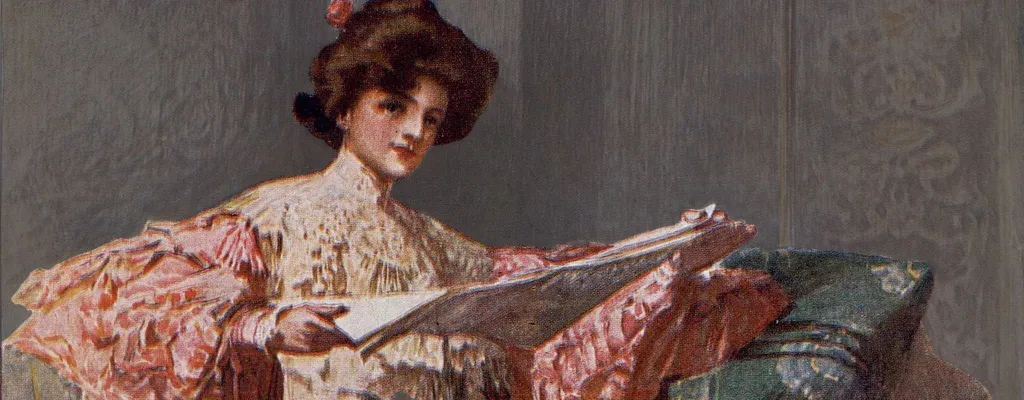
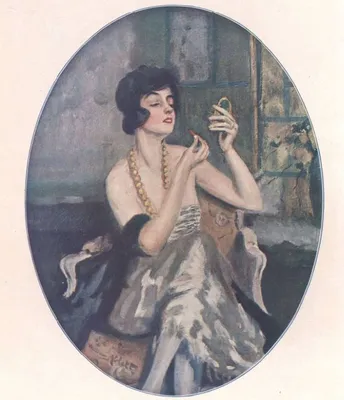
‘Times have brightened,’ writes one 1938 beauty commentator in the Sunderland Daily Echo and Shipping Gazette, as she reflects on how women of the past used to regard their faces.Do you remember how as a young girl, you looked at your face in the mirror and wished that you had a differently shaped mouth, not to mention nose, teeth, ears, and hair? You used to believe that the only thing to do with your face was to be resigned to
In May 1844, the below advertisement appeared in the Cheltenham Chronicle:A Six Weeks Tour, by Steam, to Athens, Smyrna, and Constantinople, calling at Gibraltar and Malta – with the option of visiting, en route, Vigo, Oporto, Lisbon, and Gibraltar. The Peninsular and Oriental Steam Navigation Company’s well-known splendid Steam Ship ‘Tagus,’ 900 tons and 300 horse power, will start from Blackwall on Thursday, 20th June, for the above ports.Time occupied in the Passage, out and home, about six weeks – very superior accommodation
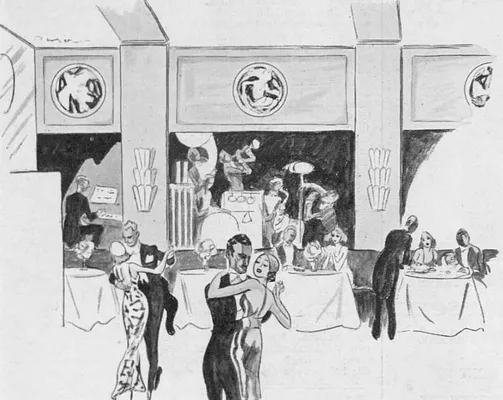
For just over a month in the summer of 1934, the Caravan Club in Endell Street, Holborn, was ‘London’s Greatest Bohemian Rendezvous.’ A safe space for society’s outcasts, it was a temporary haven for London’s marginalised LGBTQ community, home to an eclectic mix of clientele, from cabaret performers to bright young things.But in the early morning of 25 August 1934, the music ended. London’s Caravan Club was raided by the Metropolitan Police, whilst both its owners and members faced criminal charges.The
This week on The Archive we have added 78,808 brand new pages – incorporating two very special new titles and spanning nearly 100 years of headlines.Register now and explore the ArchiveMeanwhile, we have added over 10,000 pages to Truth, the groundbreaking journal founded by man of many trades Henry Labouchère. Theatre owner, politician and writer, Labouchère was a divisive character who used the pages of Truth, amongst other things, to campaign against women’s suffrage. One of Truth‘s many claims to fame
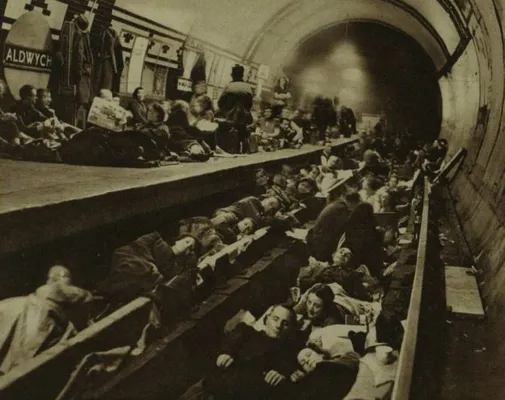
When the Blitz began on 7 September 1940, ‘It was the people of London who took command…Men, women, and children went straight to the safest place they could think of – the Underground stations.’In this special blog, over 80 years after the beginning of the Blitz, we take a look at how London’s main transport system – the Underground –  became a popular place of shelter for those seeking protection from the German bombing campaign, using an assortment of articles and photographs all to be
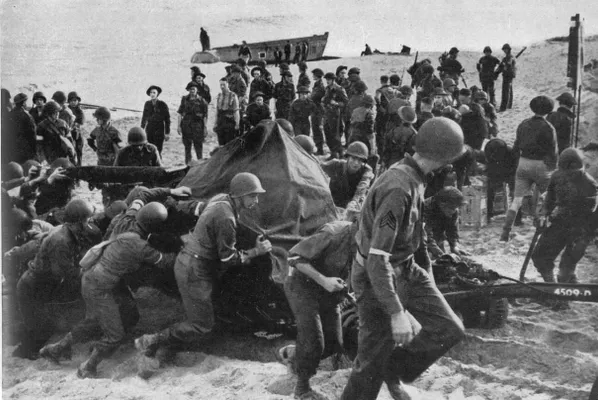
American troops
In honour of Remembrance Day, during the month of November, The British Newspaper Archive will be focusing our attention on military in the newspapers.  Coming up this month we will feature blogs about our special military titles, researching military history, women and war, and wartime rationing and fashion, as well as a guest blog about a remarkable Great War discovery from The Archive.  To begin our military month, we are delving into the newspaper headlines through the years for the
This week The British Newspaper Archive is thrilled to announce the release of a brand new title, The Atlas or, in its full form, The Atlas and General Newspaper and Journal of Literature.  The size of the paper caused a sensation when it first came out.  The London based newspapers was printed on 40cm sheets, double the size of average papers, making it the largest newspaper.  Its size was reflected in the price of 10d, which would be close to £5
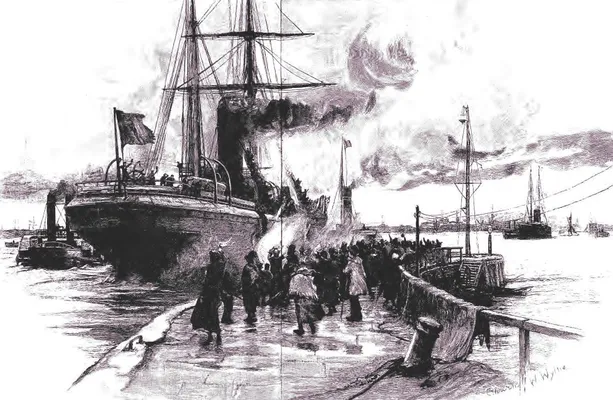
Emigrant leaving the harbour. The Graphic. October 1891
The British Newspaper Archives holds a unique collection of newspapers.  Along with local and national papers, you will find a number of speciality titles.   Here are some of the titles we hold that focus on the themes of migration and shipping.The Homeward Mail from India, China, and the EastFirst published on 1 January 1857 by Messrs. Smith, Elder, & Co. this title is a compendium of political, military, and economic news from the East. A predominant part of the paper is
The British Newspaper Archive brings you news from India, China, and further East during the height of the British Empire.  The Homeward Mail from India, China and the East was first published in 1857 by Messrs. Smith, Elder, & Co. and provided Britain with news from its colonies in the East.  The publishing company also produced the first Dictionary of National Biography and worked with major authors such as Charlotte Brontë, George Eliot, Alfred Tennyson, and Arthur Conan Doyle.  Along with The
A 13-year-old schoolboy has held the record for the highest cricket score for over 100 years.Arthur Edward Jeune ‘James’ Collins, also known by the initials A. E. J. Collins, scored an incredible 628 not out in June 1899. The cricket match took place over four days at Clifton College in Bristol.Blackburn Standard reports a score of ‘628 not out’A copy of the Blackburn Standard printed on 1 July 1899 reveals that Collins achieved the majority of his team’s total score. Out of a