Skip to content

Search the blog

Tag: ww1Tag: suffrage
Just a month after hitting the 9.5 million page milestone, we’re very pleased to announce that there are now 10 million historic newspaper pages available at The British Newspaper Archive.The website launched with 4 million pages in November 2011, which means there’s now 150% more to explore. If you’ve not searched the collection for a while, it’s definitely time to try again.Search the newspapers –>More to search and a great-value subscriptionIt’s not just our coverage that has improved over the last few
After watching Sainsbury’s Christmas advert, Kate Cole was inspired to research the real story behind WW1’s Christmas Truce. She used The British Newspaper Archive to unearth the experiences of soldiers on the Western Front in 1914.**************In December 1914, during first year of World War One, a remarkable event known as the Christmas Day Truce occurred in small pockets along the Western Front. 100 years later, one of Britain’s largest grocery shops has released a Christmas advert re-enacting the famous truce.With the
Today’s most-popular Christmas toys include Frozen dolls and tech gadgets, but it was a very different story 100 years ago. Newspapers from the time reveal there was a clear trend for ‘British-made’ military toys in the year that Britain joined World War One. Daily Mirror – Friday 04 December 1914Image © Trinity Mirror. Image created courtesy of THE BRITISH LIBRARY BOARD.View the whole newspaper pageThe ‘Great Miniature Battle’ of 1914, with trenches and barbed wireAn advert for Gamage’s department store appeared in
You can search more than 390,000 newspaper pages from 1914-1918 at The British Newspaper Archive, with more being added all the time. Juliet Greenwood got in touch to explain how she used the collection to research World War One recipes for her novel, We That Are Left.**************When I first began writing a novel set during the First World War, I knew I wanted to focus on the experience of women and civilians.For Elin, the heroine of We That Are Left,
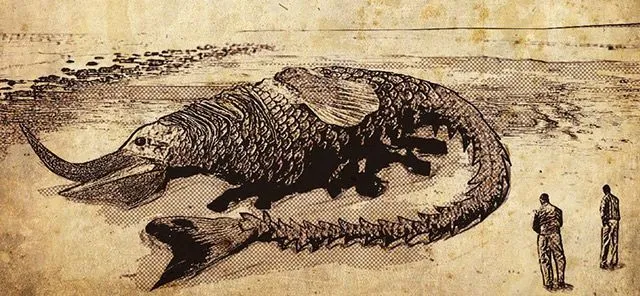
What the giant monster might have looked like in 1877
The British Newspaper Archive is full of grisly stories about the unusual and the unexplained. We’ve selected some of the oddest tales, including a description of a monster with the head of a sea lion and a rumour that Germany was turning dead soldiers into explosives during the First World War.Let us know if you’ve found a story to rival these. You can comment below or post on our Facebook page.1) 1877: A bizarre 70-foot beastA very strange creature
This step-by-step guide will show you how to search newspapers from a specific date range (such as World War One) at The British Newspaper Archive.Watch this short video tutorial or follow the steps below:Search the newspapersHow to search newspapers from World War OneThe easiest way to limit your search to a particular date range is to use the advanced search. You can get to this by clicking the ‘advanced search’ button on the homepage. Type the
The Manchester Courier and Lancashire General Advertiser, like other British newspapers, reported that Britain joined the First World War on 4 August 1914.The Courier makes for especially fascinating reading because it reported the news in a very different way.Manchester Courier: ‘Keep your country out of a wicked and stupid war’Many newspapers included an advert encouraging unmarried men between 18 and 30 years old to join the Army on 5 August 1914.This example is taken from another title printed in Manchester, the Manchester
Following an ultimatum to withdraw German troops from Belgium, Britain declared war on Germany on 4 August 1914. Monday 4 August 2014 will mark the 100th anniversary of the start of Britain’s involvement in World War One.Front pages from the start of World War OneThe news that Britain had joined World War One featured prominently in many of the newspapers printed the following day.Search newspapers from World War OneHere’s a selection of the newspaper headlines announcing Britain’s involvement in WW1.
World War One officially started on 28 July 1914 when Austria-Hungary declared war on Serbia.There are currently 25 newspapers from 28 July 1914 available to view online at The British Newspaper Archive. You’ll find clippings from some of these newspapers below, showing how the start of the war was reported.Explore newspapers from 1914 Austria-Hungary’s declaration of war starts WW1The Serbian Prime Minister received a telegram at 12.30pm on 28 July 1914. It stated that ‘Austria-Hungary… considers herself henceforward in state of war with Serbia’.While
Archduke Franz Ferdinand was assassinated 100 years ago on Sunday 28 June 1914, starting the chain of events that lead to World War One.The first reports about the assassination were printed in British newspapers the following day. You can read many of them online at The British Newspaper Archive.Read reports about Franz FerdinandManchester Evening News: ‘What the tragedy will mean’The article published in the Manchester Evening News included a report about what the assassination of Archduke Franz Ferdinand could