Skip to content

Search the blog

Tag: otdTag: suffragettesTag: traditions
This week at The Archive we have been busy adding an incredible 167,444 brand new pages to our collection, with nineteen new titles added in all. And this week’s new titles have an especially Scottish theme, with a lucky thirteen new titles added from Scotland alone over the past seven days.Meanwhile, we have added six historic London titles, digitised as part of the British Library’s Heritage Made Digital programme, and updated fifteen of our existing newspaper titles, including pages from
Nowadays, we tend to think of Halloween as a thoroughly modern phenomenon, an American Hallmark holiday. But using newspapers from the Victorian era, accessed through The Archive, we will discover in this blog how Halloween is a thoroughly ancient phenomenon.We will look at the ancient origins of the October festival, and explore its traditions, some of which have lasted through to this day, like bobbing for apples, and others that have fallen by the wayside, for example the day’s
On Christmas Day 1906 the city of Sheffield in the north of England saw the ‘heaviest Christmas snow for 25 years,’ as the Sheffield Daily Telegraph reports:On the evening of Christmas Day the snow began to fall, and yesterday morning the city was covered in a beautiful mantle of the purest white. Snow lay on the ground to the depth of about six inches, and, except in the streets, so remained until last night, when there was a further fall.Long
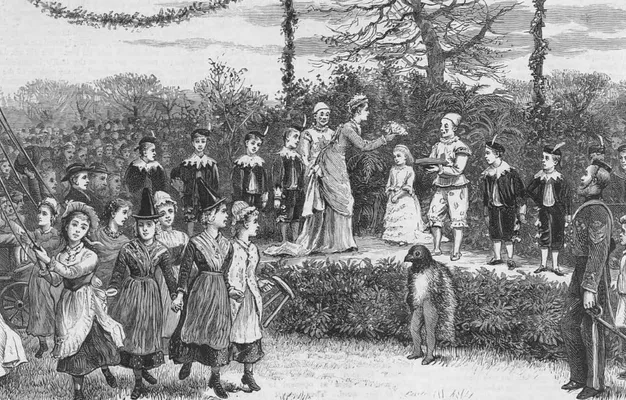
In this special blog we use the remarkable photographs and illustrations contained in our Newspaper Archive to trace the tradition of the May Queen over one hundred and fifty years, as well as exploring the origins of this fascinating ritual.We start out at Wymering, just outside of Portsmouth, in 1867. It was here, in the ‘latter part of the month of merrie May’, that a May Queen was crowned. The Illustrated Times tell us that the event is looked forward
This past week we released 105,098 pages to The Archive.  In time for International Women’s Day we are thrilled to add nine new titles to our Suffragette Collection.  We have also  updated four existing titles including The Globe for which we now have editions spanning 1804 to 1921, and our recently added Scottish title The North Star and Farmer’s Chronicle for which we now have a run from 1893 to 1911.Our new titles represent the full spectrum of the feminist and suffrage movements, from
Alice Maud Mary Arncliffe-Sennett was an energetic militant suffragette, determined to fight for women’s suffrage even if that meant getting arrested and going against prominent leaders such as Emmeline Pankhurst and Milicent Fawcett.  Through the newspapers, we can find details about Arncliffe-Sennett’s life, career, and activism.Alice, or Maud as she was often called, lived in London and worked as an actress.  Her stage name was Mary Kingsley.  Here is a review by The Era of her performance as Lady
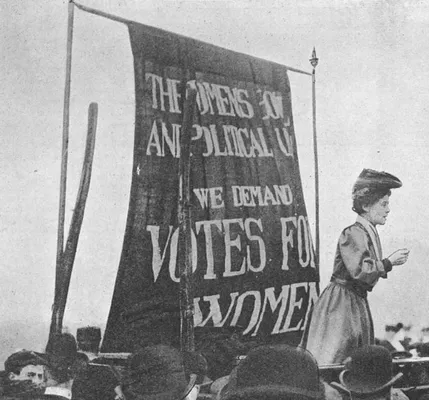
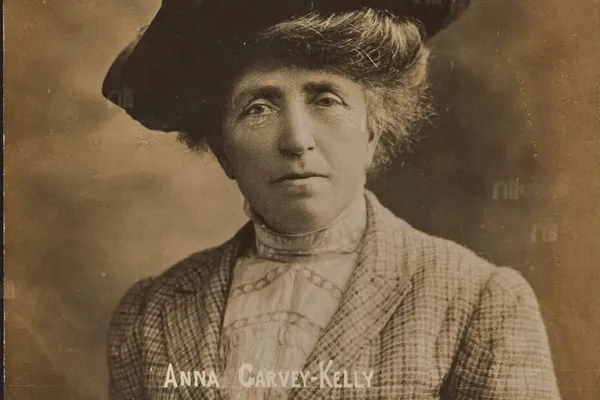
This year, in recognition of the centenary of the Representation of the People Act 1918, we will showcase the lives and activities of women involved in the Suffrage movement of the late nineteenth and early twentieth century.Despite making headlines for their activities many of these women are now forgotten.In this blog post we will revive the memory of Irish Suffragette, Anna Garvey Kelly, whose support of the cause of Suffrage saw her spend a month in Holloway prison in
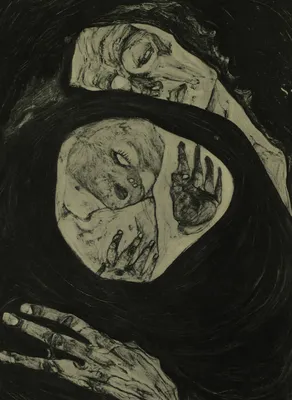
Egon Schiele
While we overwhelmingly mark 31 October as simply the celebration of Halloween, we wanted to highlight some other events that have occurred on this day over the years.On this dayOne event that had an overwhelming and lasting impact took place on this day in 1517: Martin Luther posted on the door of Castle Church, Wittenberg, his 95 Theses.The ever-expanding United States admitted its 36th state on 31 October 1864: Nevada.One of the earliest transcontinental highways in the United States was dedicated
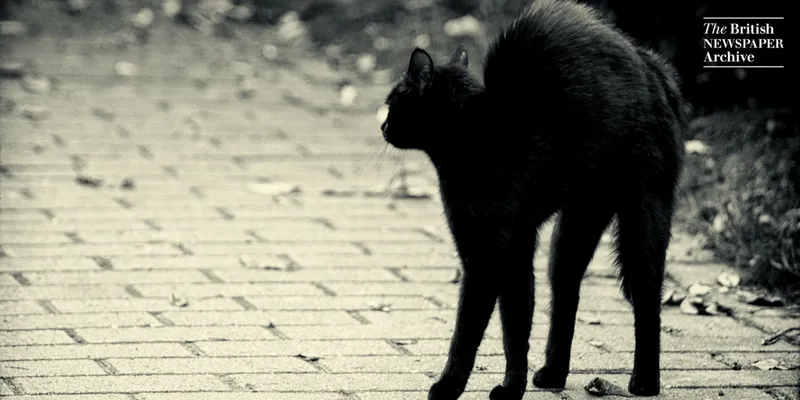
Black cat
Of witches and witchcraftAs we kick off our Halloween celebrations and delve into the history, contained within the newspapers, of witches and witchcraft (and supernatural beings), it is imperative that we preface this — perhaps unnecessarily — with an important disclaimer and reminder: witches, in the sense of practitioners of malevolent powers to do evil works, never existed. Those persecuted during the sixteenth century and onward were, more often than not, local healers and midwives.In 1562, Queen Elizabeth passed the law
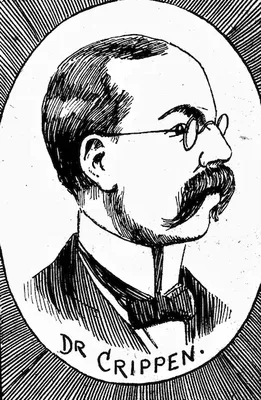
Dr Crippen
On 31 July 1910, Hawley Harvey Crippen, better known as Dr Crippen, and Ethel Le Neve, his typist-turned-lover, were arrested on board the Montrose while trying to flee west to Canada. On top of being a sensational case and arrest, it was the first example of an arrest aided by wireless telegraphy.A cross-Atlantic chase of a fleeing couple is an apt ending to our July theme of travel and migration. When you ask yourself why your ancestor or the subject of