Skip to content

Search the blog

Tag: ocrTag: canadaTag: traditions
This week at The Archive we have been beavering away to bring you 266,469 brand new pages from across the world, from Canada to Ireland, from the United States to Wales. We are delighted to introduce six brand new titles to our collection, including our first ever title from the United States, alongside another new title that was exclusively devoted to all things Anglo-American. Meanwhile, we welcome a brand new Canadian title to our collection, just in time for Canada Day,
This week at The Archive we have been busy adding an incredible 167,444 brand new pages to our collection, with nineteen new titles added in all. And this week’s new titles have an especially Scottish theme, with a lucky thirteen new titles added from Scotland alone over the past seven days.Meanwhile, we have added six historic London titles, digitised as part of the British Library’s Heritage Made Digital programme, and updated fifteen of our existing newspaper titles, including pages from
Nowadays, we tend to think of Halloween as a thoroughly modern phenomenon, an American Hallmark holiday. But using newspapers from the Victorian era, accessed through The Archive, we will discover in this blog how Halloween is a thoroughly ancient phenomenon.We will look at the ancient origins of the October festival, and explore its traditions, some of which have lasted through to this day, like bobbing for apples, and others that have fallen by the wayside, for example the day’s
On Christmas Day 1906 the city of Sheffield in the north of England saw the ‘heaviest Christmas snow for 25 years,’ as the Sheffield Daily Telegraph reports:On the evening of Christmas Day the snow began to fall, and yesterday morning the city was covered in a beautiful mantle of the purest white. Snow lay on the ground to the depth of about six inches, and, except in the streets, so remained until last night, when there was a further fall.Long
At the British Newspaper Archive, we have started to digitize international newspapers from the British Library.  These rich titles explore the story of the British Commonwealth, from the time when the sun didn’t set on the British Empire through to states gaining their independence.   At times, the subject of the newspapers brings us face to face with the stark and sometimes inhuman reality of colonialism and the legacy of the British Empire across the world.Below we will explore some
This week we have added 80,888 new pages to The Archive – and this week sees a distinctly Canadian flavour, as we have added three new historic titles from across the pond, numbering nearly 50,000 pages and spanning the years 1875 to 1920. Slightly more closer to home, we are delighted to have added the Dudley Chronicle, a Worcestershire weekly representing the local news of the large industrial market town.Dudley Chronicle | 12 February 1910Register now and explore the ArchiveMeanwhile, we continue to strengthen our
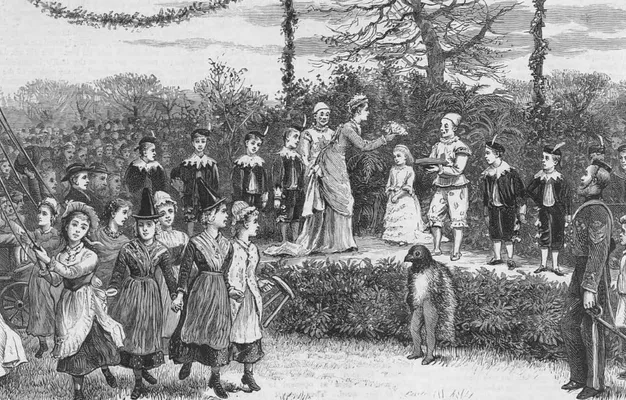
In this special blog we use the remarkable photographs and illustrations contained in our Newspaper Archive to trace the tradition of the May Queen over one hundred and fifty years, as well as exploring the origins of this fascinating ritual.We start out at Wymering, just outside of Portsmouth, in 1867. It was here, in the ‘latter part of the month of merrie May’, that a May Queen was crowned. The Illustrated Times tell us that the event is looked forward
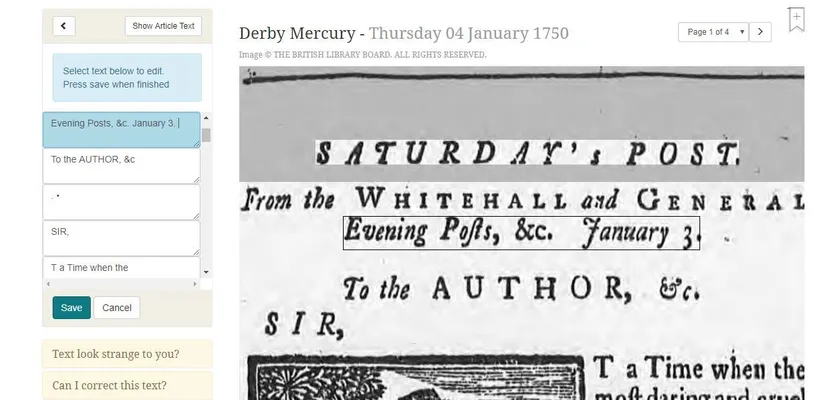
One of the features of The British Newspaper Archive is the OCR editing tool.  This allows every user to contribute to the improvement of The Archive.  OCR stands for Optical Character Recognition– the process we use to transform millions of digitised images into searchable text.   The computer takes an image of the page and then turns each line into text.  However, as many of us have encountered, the text is not always correct and needs improvement.  As a group, we
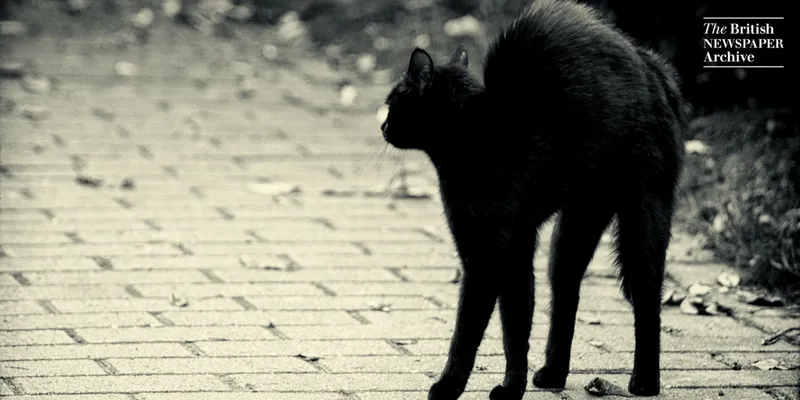
Black cat
Of witches and witchcraftAs we kick off our Halloween celebrations and delve into the history, contained within the newspapers, of witches and witchcraft (and supernatural beings), it is imperative that we preface this — perhaps unnecessarily — with an important disclaimer and reminder: witches, in the sense of practitioners of malevolent powers to do evil works, never existed. Those persecuted during the sixteenth century and onward were, more often than not, local healers and midwives.In 1562, Queen Elizabeth passed the law
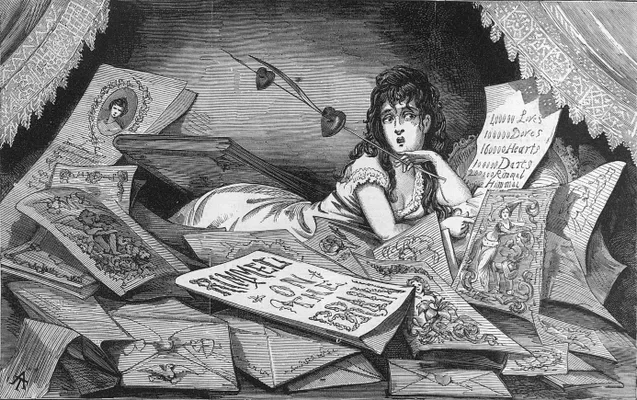
Valentine’s Day in its present iteration is inexorably linked to both romantic love and commercialism. It inspires strong feelings, both for and against this day of chocolate boxes and heart-shaped cards. However, the day and its traditions have not been static. In performing a simple search for ‘Valentine’s Day’ on The British Newspaper Archive, you can start to see the ways in which the holiday — and its reception — have changed (and, occasionally, stayed the same) over the years.An 1845 description