Skip to content

Blog

Tag: Railway
As we count down to Christmas here at The Archive, we are delighted to welcome 140,318 brand new pages to our collection, with the addition of three brand new titles over the last seven days.We have two very special railway titles joining us this week, shining a light on the early days of the railway in the United Kingdom and Ireland and its expansion, as well as a new title which joins us from Northern Ireland. Meanwhile, we have updates
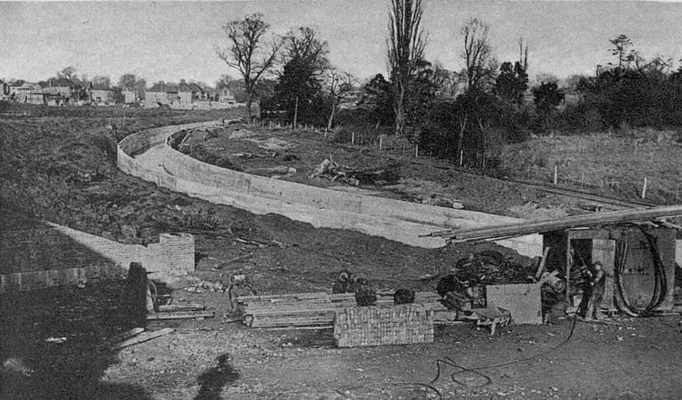
I know a land where the wild flowers grow Near, near at hand if by train you go, Metro-land. Metro-land.The above pre-First World War verse written by George R Sims coined the phrase ‘Metro-land’ – that area of north west of Wembley served by what was then called the Metropolitan Railway, and is now known as the Metropolitan Line.In this blog, using articles found on the British Newspaper Archive, we will explore how the Metropolitan Railway shaped London’s suburbs,
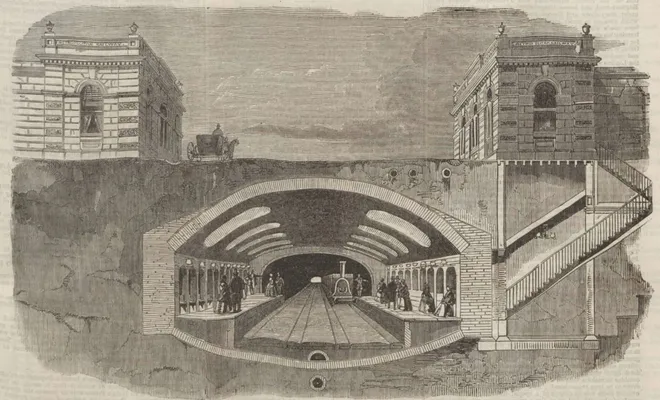
On 10 January 1863 the Metropolitan Railway was opened in London. An unprecedented feat of engineering, the Metropolitan Railway was the first underground railway in the world, forming the basis of the London underground and other global underground systems.In this special blog, we take a look at the historic first three days of the Metropolitan Railway’s existence, from its grand opening on Friday 10 January 1863, to the teething problems it encountered when it opened to the public on the Saturday and Sunday,
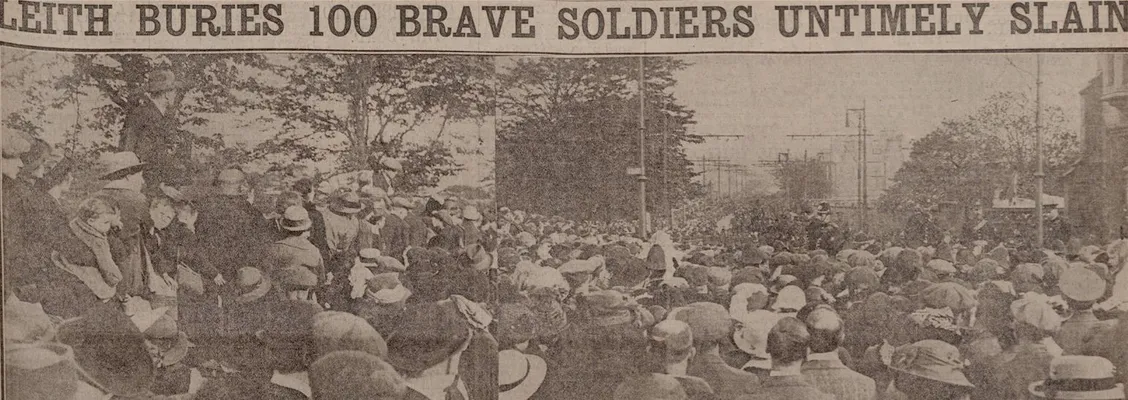
100 years ago today, the worst rail disaster in British history occurred at Quintinshill near Gretna Green in Dumfriesshire, Scotland.On May 22nd 1915, a devastating crash involving a total of five trains, killed 226 people and injured a further 246. The vast majority of those killed were territorial soldiers of the 1/7th (Leith) Battalion, Royal Scots, on their way to participate in the Gallipoli campaign.Disaster stuck when a troop train headed for Liverpool struck a passenger train that had been moved onto
More on this topic:
It’s hard to believe, but The British Newspaper Archive has now reached the grand old age of three. We launched on 29 November 2011 with 4 million fully searchable historic newspaper pages and have come a long way since then.Please click the image to enlarge itA treasure trove of informationYou can now search more than 9 million pages, from over 300 British and Irish newspaper titles, spanning 1710-1954. Reading all of those pages would be no mean feat – we’ve estimated that it would
On 30 September 1860, the first tram service in the UK started operating at Birkenhead on Merseyside.The tram service was the idea of the (aptly named) George Francis Train, an American entrepreneur who was a pioneer of innovative transport systems.To mark that historic day, here is a newspaper story from October 1860 that reports on the opening of the Birkenhead tram service.
On 27 September 1825, George Stephenson opened the Stockton and Darlington Railway by driving the engine, ‘Locomotion’, between the two towns, and delivering a cargo of coal and flour.The train also carried 1,000 passengers, who, according to this newspaper report from 7 October 1825, ‘were highly delighted’ by the novel exhibition.Start your newspaper journey by registering today
More on this topic:
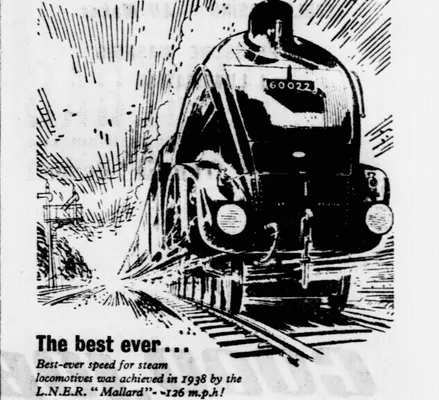
‘The locomotive was drawing a streamlined train to which was attached to a dynamometer car, in which were charts and instruments which confirmed the records.’On 3 July 1938, ‘The Mallard’ locomotive (engine number 6648) achieved a new UK record for steam trains, travelling at 125.88 MPH on the UK’s East Coast Main Line.To celebrate the 75th anniversary of that historic day, here is a newspaper story from 1938 reporting on the setting of this famous world record, which remains unbeaten to this day.
The Armagh railway disaster took place on 12 June 1889 with the loss of 80 lives.The accident happened after the engine stalled on a steep hill, and the crew decided to split the train in two in order to negotiate the steep incline.Tragically, the second half of the train was not properly braked, and it ran back down the hill and collided with an oncoming train.At the time, this was the worst rail disaster that had occurred in the UK
More on this topic: